As an animal chiropractor, one of the questions I hear most often is:
“What can I do at home to help my dog stay strong and comfortable?”
The good news? You don’t need fancy equipment, a gym membership, or hours of training.
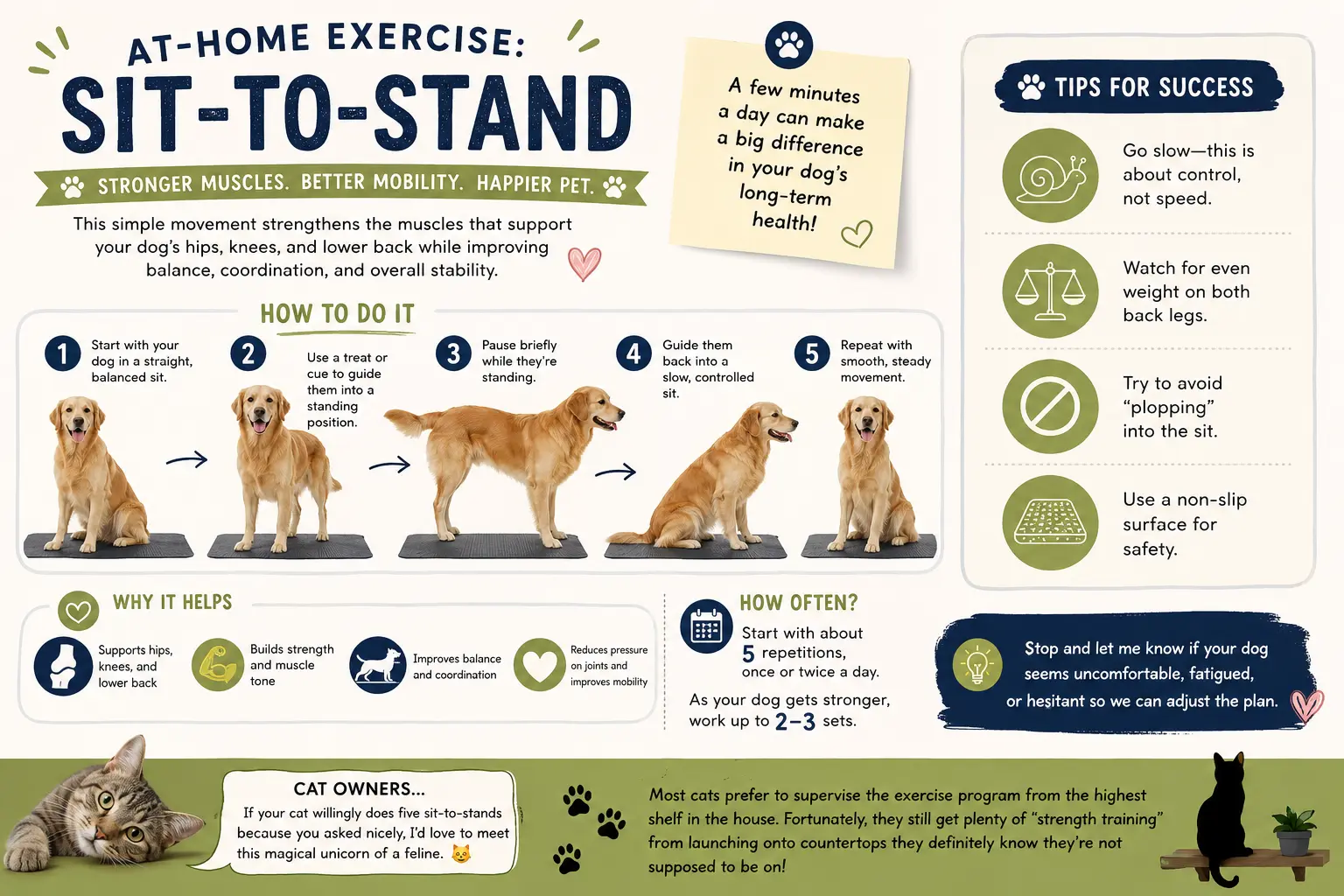
One of my favorite exercises to recommend is called the Sit-to-Stand. It may look simple, but it’s one of the best strengthening exercises you can do with your dog right at home.
Think of it as your dog’s version of a squat!
Why Is the Sit-to-Stand So Effective?
Every time your dog performs a controlled Sit-to-Stand, they’re strengthening the muscles that stabilize their:
- Hips
- Knees
- Lower back
- Core
Strong muscles help support the joints, improve stability, and make everyday activities—like climbing stairs, getting in and out of the car, going for walks, and playing fetch—much easier.
This exercise also improves:
- Balance
- Coordination
- Body awareness (proprioception)
- Functional strength for everyday movement
Whether your dog is young or old, these are all important ingredients for lifelong mobility.
Which Dogs Benefit the Most?
Almost every dog can benefit from this exercise, but I especially recommend it for:
🐾 Senior Dogs
As dogs age, they naturally lose muscle mass. Maintaining strength can help improve balance, confidence, and overall mobility.
🦴 Dogs with Arthritis or Joint Stiffness
Stronger muscles help reduce stress on the joints, making movement more comfortable.
💪 Dogs Recovering from Injury
Once your veterinarian and animal chiropractor have cleared your dog for exercise, Sit-to-Stands can become an important part of their recovery.
🏃 Active and Sporting Dogs
Whether your dog competes in agility, enjoys hiking, or simply loves chasing tennis balls, stronger stabilizing muscles can improve performance and help reduce injury risk.
How to Perform the Sit-to-Stand
The key isn’t speed—it’s quality.
Here’s how:
- Begin with your dog sitting squarely (not leaning to one side).
- Use a favorite treat or verbal cue to encourage them to stand. Some dogs naturally walk forward into the stand, and that’s perfectly okay.
- Pause briefly while they’re standing.
- Slowly guide them back into a controlled sit.
- Repeat with smooth, even movement.
Remember:
Slow and controlled always beats fast and sloppy.
Tips for Success
To get the most out of the exercise:
- Keep your dog sitting straight.
- Watch for equal weight on both back legs.
- Avoid letting them “plop” into the sit.
- Practice on a non-slip surface (your hardwood floor is not an agility course!).
- Make it fun by rewarding them with praise or a healthy treat.
How Often Should You Do It?
Start with:
- 5 repetitions
- Once or twice each day
As your dog gets stronger, you can gradually increase to 2-3 sets, always prioritizing good form over more repetitions.
If your dog appears uncomfortable, becomes fatigued, or doesn’t want to continue, stop the exercise and let me know. We can modify it to fit their individual needs.
What About Cats?

I couldn’t leave out my feline patients!
If your cat happily performs five Sit-to-Stands because you politely asked…
I’d absolutely love to meet this magical unicorn. 😹
Most cats prefer supervising the workout from the highest shelf in the house.
The good news is that interactive play, climbing cat trees, chasing feather toys, and all those gravity-defying leaps onto places they’re “not supposed to be” provide excellent strengthening exercise.
Exercise + Chiropractic = A Great Team
Exercise is one of the best things you can do for your pet—but it’s even more effective when your pet is moving well in the first place.
If joints aren’t moving properly, your dog may compensate with other muscles, making strengthening exercises less effective.
That’s where animal chiropractic can help.
Gentle chiropractic adjustments help restore normal joint motion, improve mobility, and allow your pet to move more comfortably. When combined with strengthening exercises like the Sit-to-Stand, they create an excellent foundation for long-term mobility and quality of life.
If you’re new to animal chiropractic, learn more about Animal Chiropractic Care and how it can help dogs and cats live healthier, more active lives.
You can also visit my Frequently Asked Questions page to learn what to expect during your pet’s chiropractic visit and discover common signs that your pet may benefit from care.
Want to know how I became an animal chiropractor? Read Why I Became an Animal Chiropractor to learn more about my journey and passion for helping pets move and feel their best.
Let’s Keep Your Pet Moving!
A few minutes each day can make a tremendous difference in your dog’s strength, balance, and long-term mobility.
If you’d like me to demonstrate the Sit-to-Stand during your next appointment—or you’d like to know if it’s appropriate for your pet—I’d be happy to help.
Together, we can keep your pet moving comfortably for years to come.
Helping Pets Move Better, Feel Better, and Live Better.