
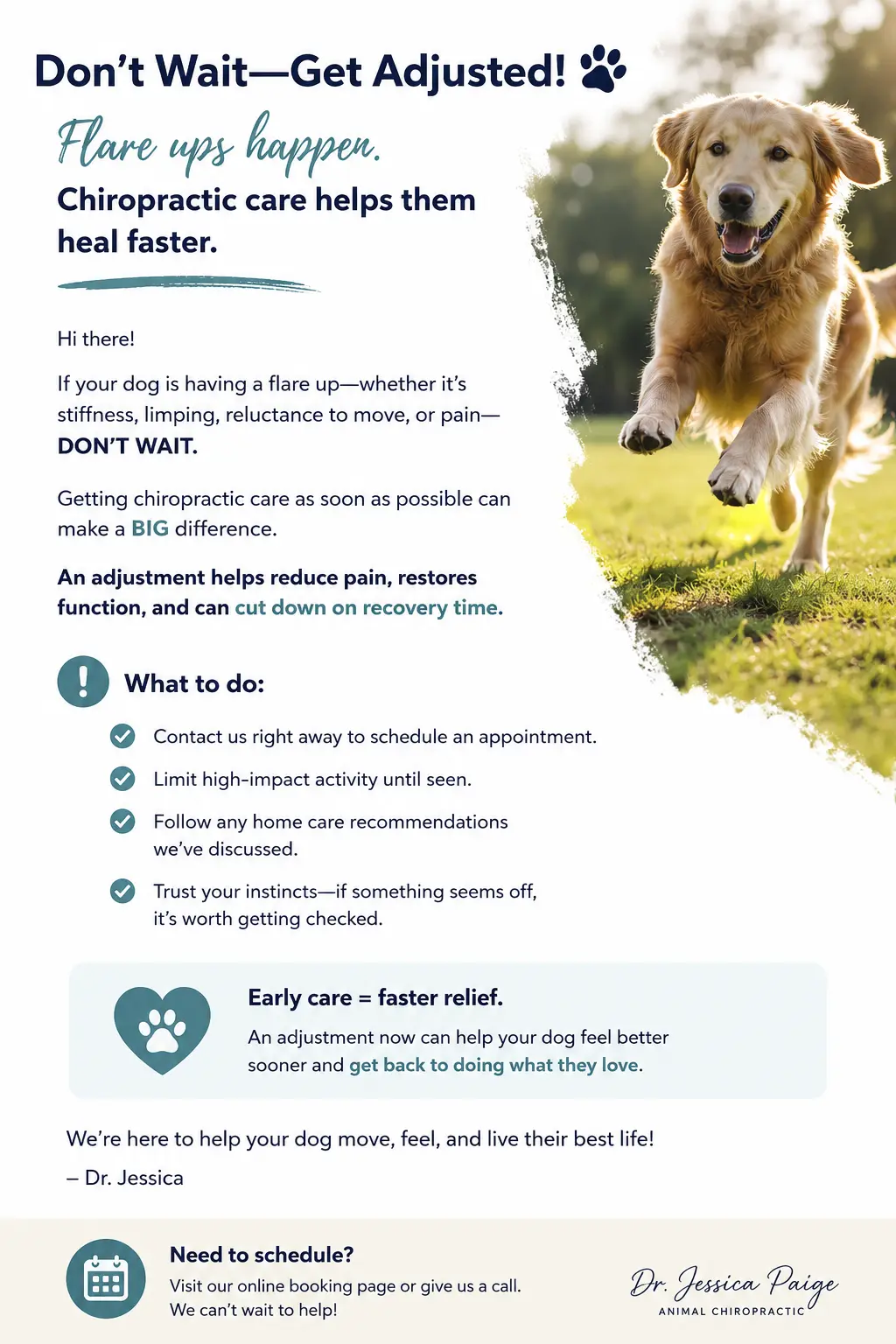
Flare-ups happen—even when your dog or cat has been doing great!
Maybe they wake up a little stiffer than usual. Your dog hesitates before jumping into the car, or your cat suddenly stops jumping onto their favorite spot. Perhaps you notice limping, difficulty getting comfortable, changes in posture, or simply that “something seems off.”
It can be tempting to give it a few days and see if things improve on their own. But when it comes to changes in your pet’s movement and mobility, waiting isn’t always the best approach.
Signs Your Dog or Cat May Be Having a Flare-Up
Animals are incredibly good at hiding discomfort and compensating when something doesn’t feel right. Watch for subtle changes such as:
- Increased stiffness, especially after resting
- Limping or favoring a leg
- Difficulty getting up, lying down, or getting comfortable
- Hesitation with stairs or jumping
- Reluctance to jump onto furniture, counters, or favorite resting spots
- Difficulty getting into or out of the car
- Moving more slowly or cautiously than usual
- Changes in posture, gait, or the way they sit or lie down
- Less interest in walks, play, or normal activities
- A previous mobility issue suddenly returning
- That gut feeling that “something just isn’t right”
You know your pet. Small changes can be important clues that their body is compensating for something.
Should You Wait Until the Flare-Up Settles Down Before Chiropractic Care?
You may have heard that you should wait until a flare-up settles down before bringing your pet in for chiropractic care.
That’s not necessarily the case.
For a dog or cat who is an appropriate candidate for chiropractic care, getting them evaluated early in a flare-up can help identify changes in joint movement, mobility, and compensation patterns.
Rather than allowing your pet to continue moving differently and potentially develop additional compensation, addressing the problem early may help restore movement and potentially shorten recovery time.
The goal isn’t necessarily to wait until your pet feels better before receiving chiropractic care. Chiropractic care may be one of the tools used to help support comfortable movement during their recovery.
What Should You Do When Your Pet Has a Flare-Up?
Contact us as soon as you notice a change.
Until your pet can be evaluated, keep activity controlled and avoid unnecessary high-impact activities. For dogs, that may mean temporarily limiting running, jumping, rough play, or unnecessary stairs. For cats, consider making favorite resting areas, food, water, and litter boxes easier to access so they don’t have to make large jumps.
And remember, chiropractic care does not replace veterinary care. Sudden severe pain, significant weakness, inability to stand or walk, loss of bladder or bowel control, major trauma, or rapidly worsening symptoms warrant prompt veterinary evaluation.
Early Care Can Make a Difference 🐾
The biggest takeaway is simple:
Don’t automatically wait for a flare-up to “work itself out.”
The sooner we can evaluate what is happening, the sooner we can determine whether chiropractic care is appropriate and help your dog or cat get back to moving comfortably and doing the things they love.
Not sure if your pet needs to come in? Reach out—we’re here to help!