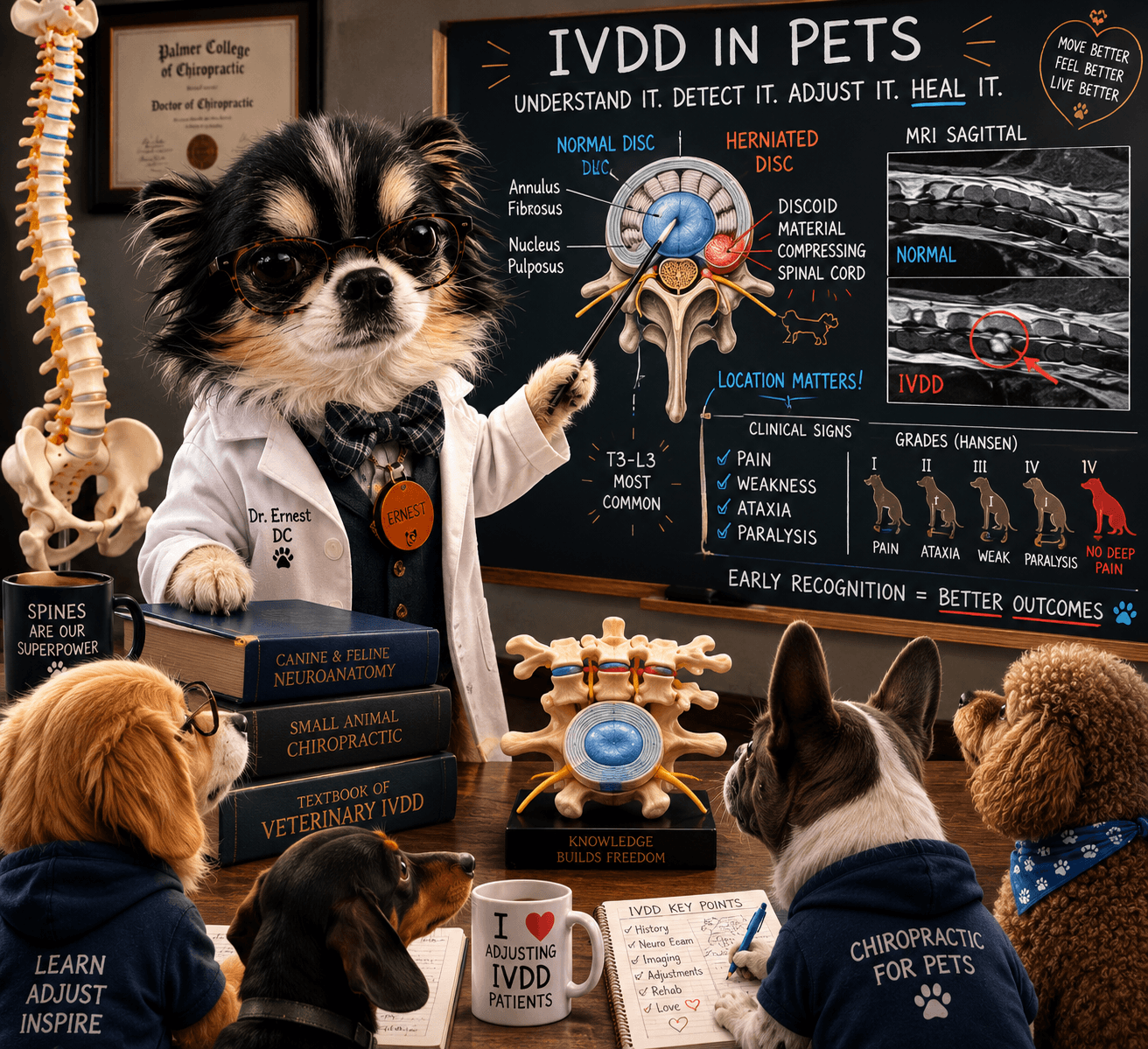
 Hearing that your pet has been diagnosed with Intervertebral Disc Disease (IVDD) can be overwhelming. Many pet owners immediately wonder: Will my dog ever be normal again? Can they still enjoy life? What should I do next?
The good news is that an IVDD diagnosis does not automatically mean the end of an active, happy life. While every case is different, many pets with IVDD continue to thrive when they have the right support, healthy habits, and a management plan tailored to their needs.
If you’re unfamiliar with animal chiropractic care, take a moment to learn more about Animal Chiropractic and how it may support your pet’s mobility, comfort, and overall wellness:
Understanding IVDD
IVDD occurs when the discs between the vertebrae of the spine become damaged or displaced, potentially causing pain, inflammation, nerve irritation, and mobility issues. Some pets experience mild discomfort, while others may develop weakness, difficulty walking, or even paralysis.
Whether your pet has recently been diagnosed or has been living with IVDD for years, there are several things you can do to support their spinal health and overall well-being.
1. Keep Your Pet Lean
One of the most important things you can do is maintain a healthy body weight. Excess weight places additional stress on the spine, joints, and supporting muscles.
Unfortunately, many American pets are overweight, which can make IVDD symptoms worse and increase the risk of future flare-ups. Work with your veterinarian to determine your pet’s ideal weight and adjust feeding portions if necessary.
Every pound matters when it comes to protecting the spine.
2. Prioritize Daily Exercise
Many owners assume that rest is always best after an IVDD diagnosis. While rest may be necessary during acute episodes, long-term inactivity can actually weaken the muscles that support the spine.
And no—following you from the couch to the kitchen doesn’t count as exercise!
Consistent, appropriate movement helps maintain muscle strength, flexibility, circulation, and overall mobility. For many dogs, a goal of at least 30 minutes of activity per day is beneficial, though the type and amount of exercise should always be appropriate for the individual pet.
Regular activity is far better than doing very little during the week and then trying to make up for it with intense weekend adventures.
3. Feed Quality Fuel
The body can only function as well as the fuel it receives.
A nutritious diet provides the building blocks needed for tissue repair, muscle maintenance, and overall health. In addition, certain supplements may support joint health, mobility, and healthy inflammatory responses.
Remember: inflammatory foods can contribute to inflammation throughout the body, including the joints and soft tissues. Choosing high-quality nutrition can be an important piece of your pet’s long-term wellness plan.
4. Prevent Slips and Falls
For pets with IVDD, a simple slip on a hardwood floor can sometimes trigger a setback.
Creating a safer home environment can significantly reduce the risk of injury. Consider placing rugs, runners, yoga mats, or non-slip flooring in areas where your pet frequently walks.
Pay special attention to:
- Hallways
- Entryways
- Areas around food and water bowls
- Places where your pet jumps on or off furniture
A little traction can go a long way toward protecting the spine.
5. Build a Strong Core
Just like people, pets rely on their core muscles to stabilize and support the spine.
Strong abdominal and back muscles help distribute forces more effectively and reduce stress on spinal structures. Consistent exercise, therapeutic exercises, and rehabilitation programs can all help develop better core strength.
Avoid the “weekend warrior” approach where your pet is inactive most of the week and then suddenly overexerts themselves on the weekend. Consistency is key.
6. Consider Regular Chiropractic Care
As part of a conservative management, animal chiropractic care will help support mobility and comfort.
When joints are moving properly, the surrounding muscles, ligaments, and soft tissues often function more efficiently. Chiropractic care can help maintain joint mobility, support healthy movement patterns, and reduce physical stress throughout the body.
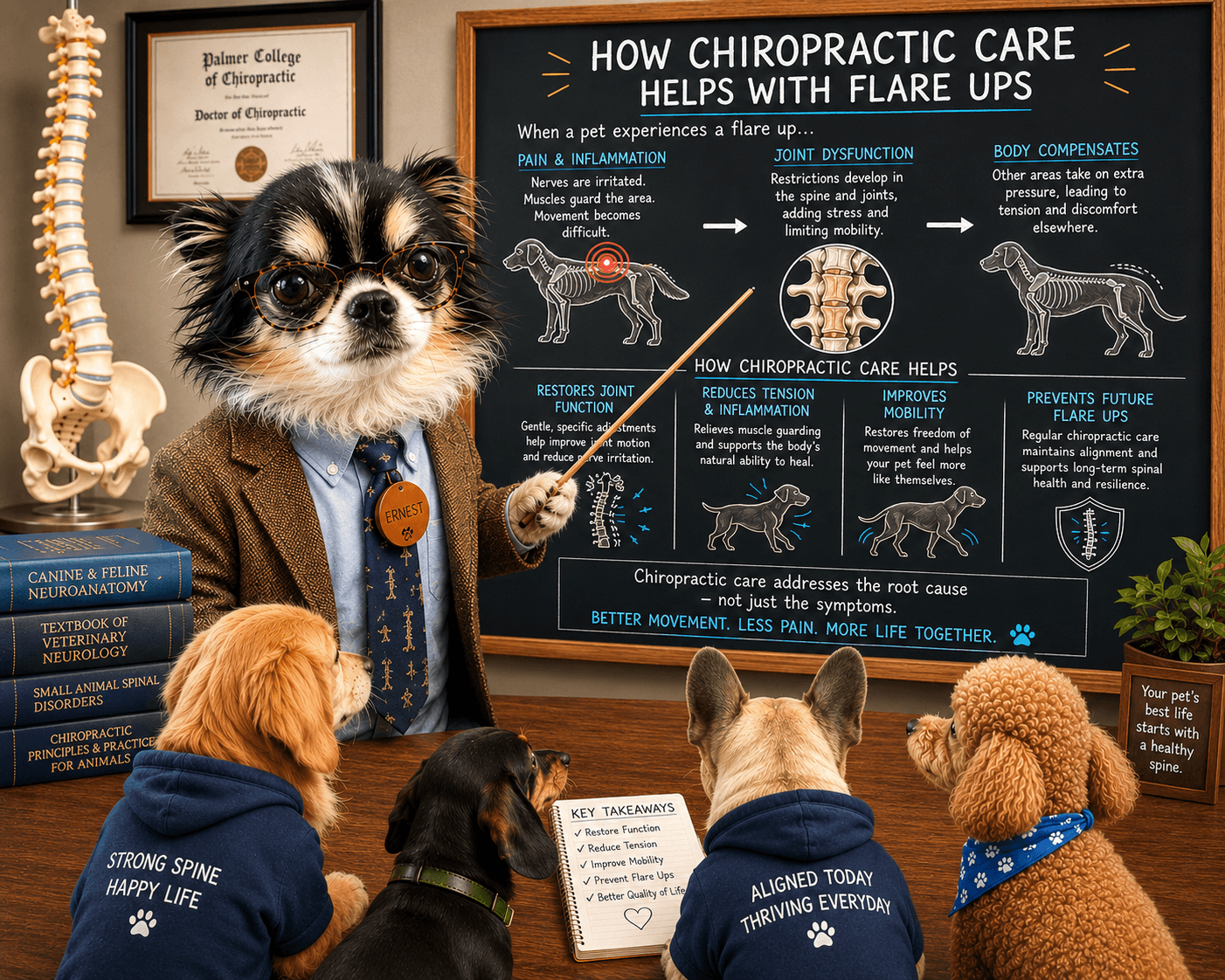
Curious about what happens during an animal chiropractic appointment? Learn more about the process and benefits here:
There Is No Magic Fix
One of the most important things pet owners should understand is that there is no single treatment, supplement, exercise, or therapy that “fixes” IVDD.
The best outcomes typically come from a combination of:
- Healthy weight management
- Consistent exercise
- Proper nutrition
- Environmental modifications
- Core strengthening
- Appropriate veterinary care
- Regular chiropractic care when indicated
Small, consistent habits practiced over time often have the greatest impact on your pet’s quality of life.
If you have questions about whether chiropractic care may be appropriate for your pet, you may find additional answers on our Frequently Asked Questions page.
The Bottom Line
An IVDD diagnosis can feel scary, but it doesn’t have to define your pet’s future. With the right support system and a proactive approach, many pets continue to enjoy walks, playtime, adventures, and years of happy companionship.
Focus on what you can control, stay consistent, and work with a healthcare team that understands your pet’s unique needs.
Your pet’s diagnosis is only part of their story—not the ending.
Ready to Learn More?
Whether your pet has recently been diagnosed with IVDD or you’re looking for ways to support their mobility and comfort, we’re here to help.
Contact us to discuss whether animal chiropractic may be a beneficial part of your pet’s healthcare team.
Contact Dr. Jessica Paige today to book an appointment!
Learn more about Dr. Paige and her approach to animal chiropractic care.