What Your Pet’s Posture May Be Telling You
Have you ever looked at your pet and thought, “Something seems a little off”? Sometimes the earliest signs of discomfort are subtle. They show up in the small things — how your pet stands, sits, stretches, walks, or gets up from rest.
Dogs and cats are very good at compensating for discomfort, which means they may keep going even when something in their body is not moving quite right. In many cases, pain is the last thing to show up, so posture changes and subtle movement changes may be the first clues that something is wrong.
What to Look For
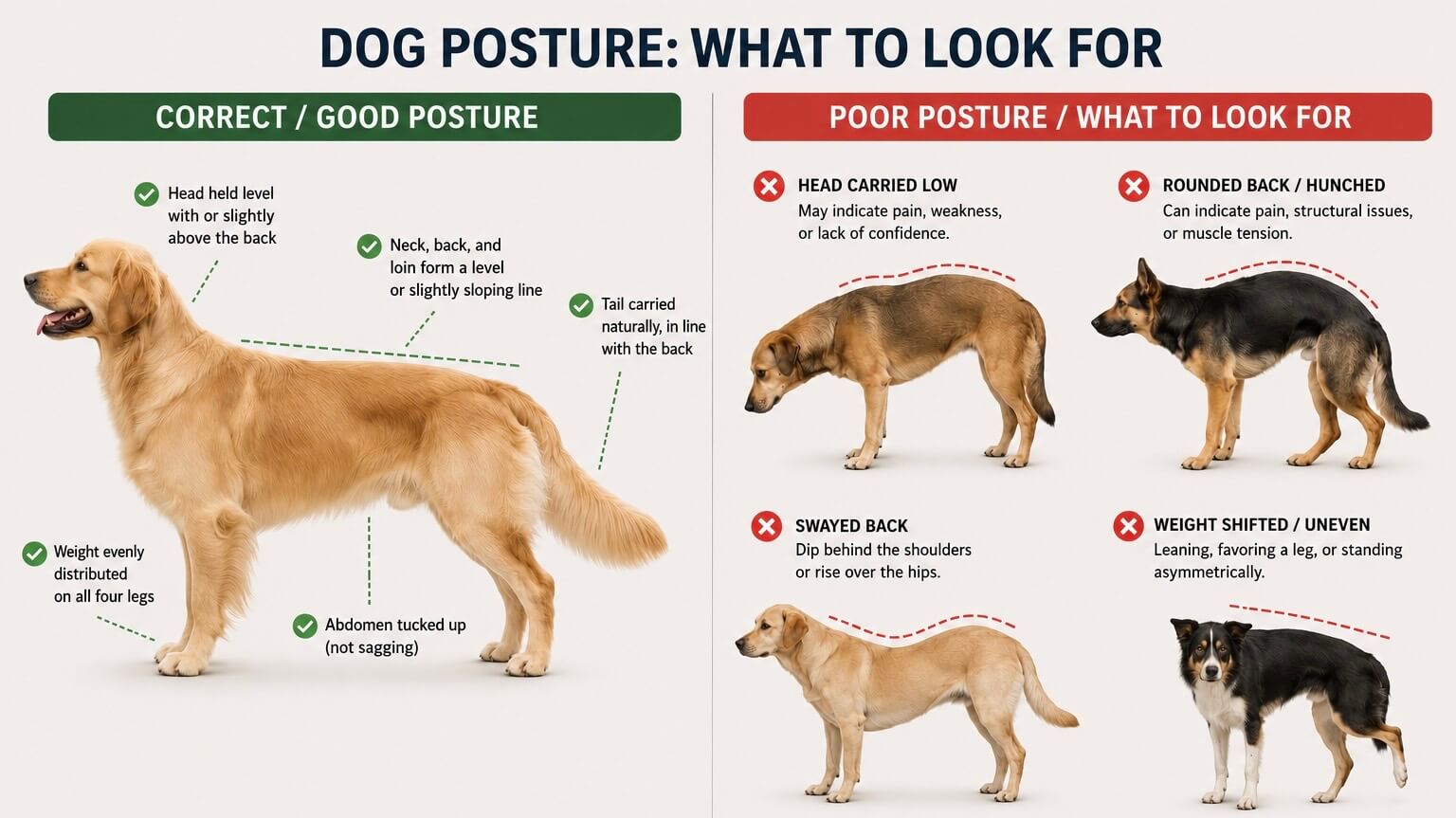
Here are some posture changes that may signal your pet needs attention:
- Head held low or tilted unevenly.
- A hunched or rounded back.
- Weight shifted to one side.
- Stiffness when getting up.
- Trouble sitting squarely.
- Reluctance to jump, climb stairs, or play like usual.
- A tucked tail or a tail that looks different than normal.
- Standing with one leg “resting.”
- Moving more slowly, carefully, or awkwardly.
- Uneven wear on nails or paws.
You may also notice your pet taking longer to settle down, shifting positions often, or avoiding certain movements like stretching, turning, or bending. These can all be signs that your pet is compensating for discomfort or restricted motion.
Why Posture Matters
Posture reflects how the spine, joints, and muscles are working together. When one area is restricted or uncomfortable, the rest of the body often has to compensate. Over time, those compensation patterns can affect comfort, mobility, performance, and overall well-being.
Even if your pet is still active, posture changes can be an early warning sign that their body is working harder than it should be.
How Chiropractic Care May Help
Animal chiropractic care can be a helpful part of supporting pets with posture changes, stiffness, or movement issues. By improving motion and function in the spine and joints, chiropractic care may help pets move more comfortably and support better balance, body awareness, and overall function.
For many pets, the goal is not just to help them feel better today, but to support healthier movement for the long term.
When to Pay Attention
If your pet seems a little “off,” trust what you see. A change in posture, gait, or movement is worth noticing, even if your pet is still eating, playing, or acting mostly normal. Small changes can be the body’s first way of asking for help.
If you notice any of these signs, it may be a good time for an evaluation.
If you’d like to learn more about animal chiropractic care, pet mobility, and how posture can affect your pet’s comfort, explore the services and resources here: